Buttock Implants Tampa Fl


While many women wish they could reduce the size of their derriere, others have always longed for a more feminine, full, and firm buttocks. With today’s fashions focusing on “apple-bottom jeans” and the “Kardashian butt,” it’s no surprise that cosmetic surgery of the buttocks and gluteal augmentation with implants is on the rise.
Dr. Traci Temmen, M.D. is a specialist in gluteal augmentation with implants (i.e. butt implants). She is one of only a few board-certified plastic surgeons in the Tampa Bay area to perform butt implants and other cosmetic surgery of the gluteal region including the Brazilian butt lift, liposuction, and fat transfer or fat injections.
With her advanced training and experience in cosmetic surgery of the buttocks, Dr. Traci Temmen is able to offer each patient the surgery to fit his or her individual needs, whether it be gluteal implants, fat injections, or gluteal implants with fat injections. Her patients also appreciate her perfectionist nature, elegant surgical skill, and gentle bedside manner all in the comfort of her boutique plastic surgery suite. If you are finally ready to get the body you have always dreamed of, call Dr. Traci Temmen, gluteal augmentation with implants specialist, today!

Similar to a breast augmentation with implants, gluteal augmentation with implants uses a solid, shaped, silicone implant to increase the size and projection of the buttocks. The butt implant can be placed in the gluteal muscle, under the gluteal fascia or fibrous covering, or rarely under the skin and fat of the buttocks. The implants, one for each buttock, are placed through a vertical incision in the midline of the buttocks, just above the gluteal cleft.
Gluteal implants are able to increase the projection of the buttocks, and thus increase the volume of the butt, but do not have an effect on the lateral buttocks, lower back, or thighs. On the other hand, the Brazilian butt lift is a two-part cosmetic surgery of the gluteal region that uses a combination of both liposuction and fat transfer to sculpt the areas of the body around the butt and increase the size, alter the shape, and lift the buttocks. Because butt implants are not malleable or able to be molded and shaped the same way that fat is, gluteal implants allow for less adjustment and customization than a Brazilian butt lift, but provide more projection for a given volume.
Because of these complimentary effects, patients that wish to have a gluteal augmentation but do not have enough fat for a Brazilian butt lift by itself, may benefit most from a combination of gluteal augmentation with butt implants and a Brazilian butt lift to further shape, sculpt, and lift the lower body and buttocks.
Prior to gluteal augmentation with implants, Dr. Traci Temmen carefully examines each patient and pays meticulous attention to his or her particular concerns and desires. By adjusting her surgical technique and altering the surgical plan based on individual anatomy, desires, and input, Dr. Temmen can provide custom-fit, tailor-made gluteal augmentation surgery to accommodate every patient, male or female.
1 of 4
Just like for breast augmentation with implants, everybody considering gluteal augmentation with implants wants to know “what is the best butt implant size for me?” Also similar to breast implants, butt implant sizes are measured in cubic centimeters or cc’s. The standard-sized butt implants range from 200cc to 400cc per side. While this may seem small when compared to the average amount of fat injected per side during a Brazilian butt lift (i.e. 400cc to 600cc per side), because of its solid silicone shape, a butt implant provides more gluteal projection (i.e. increase in an anterior to posterior, or front to back dimension) than the same amount of injected fat.
During a gluteal augmentation with butt implants consultation, Dr. Traci Temmen will have a detailed conversation and perform a careful examination of each patient. With input from the patient, Dr. Temmen will then be able to recommend the best butt implant size that will provide the safest, longest-lasting, and most attractive results.



The best candidate for a gluteal augmentation with butt implants is a very thin patient with virtually no excess fatty deposits anywhere on the body and minimal gluteal sagging who wishes to increase the projection and volume of the buttocks. Patients with even minimal amounts of excess fat may be better served with a Brazilian butt lift that uses a combination of liposuction and fat transfer to the buttocks to increase the size, improve the shape, and reduce sagging of the buttocks. For appropriate candidates, a Brazilian butt lift can eliminate the need for and risks associated with the use of prosthetic implants. Additionally, unlike gluteal augmentation with implants, the Brazilian butt lift allows for three-dimensional gluteal sculpting and augmentation whereas gluteal augmentation with butt implants only increases gluteal volume in a front-to-back direction (i.e. anterior to posterior projection).
To ensure each patient receives the surgery that will give the best and safest gluteal augmentation results possible, Dr. Traci Temmen performs a detailed history and physical examination during each gluteal augmentation with implants consultation. This information, the patient’s desires, and experience with gluteal augmentation allows Dr. Temmen to recommend the ideal surgery to each patient whether it be gluteal augmentation with butt implants, a Brazilian butt lift, or a combination of butt implants with liposuction and fat transfer to the buttocks.

Of course, not every patient is a good candidate for gluteal augmentation with butt implants. Patients that have adequate amounts of fat to perform liposuction and fat transfer to the buttocks may be better served by a Brazilian butt lift surgery. Also, patients with a history of past or current infections that could increase the risk of implant infection are not appropriate candidates for gluteal augmentation with butt implants. Patients with severe skin laxity or excessive gluteal sagging resulting from gastric bypass surgery or massive weight loss may require skin excision or a lower body lift in addition to buttock implants, liposuction, and fat transfer to the gluteal region.
Patients who smoke, have complicated medical problems (e.g. heart disease, diabetes, blood clots), or are considered obese with a BMI >30 are also not candidates for gluteal augmentation with implants. Dr. Traci Temmen requires that patients stop smoking for at least 6 months to 1 year, have medical conditions well controlled, and have reached their ideal body weight before proceeding with butt implants or cosmetic surgery of the gluteal region.
Additionally, to obtain the best results possible, women who have recently had a baby should postpone surgery for at least 6-9 months to let their skin and soft tissues contract before considering gluteal augmentation with implants, a Brazilian butt lift surgery, or liposuction with fat transfer surgery.
Assuming there are no postoperative complications and that the patient does not have a history of abnormal scarring or keloid formation, the scar resulting from a gluteal augmentation with butt implants is well-concealed and barely noticeable one year postoperatively. The scar associated with placement of butt implants is usually one or two vertical incisions, about three inches long, placed in the midline of the buttocks just above the gluteal cleft. This scar is covered by clothes and camouflaged well by surrounding skin creases.
Dr. Traci Temmen performs her cosmetic gluteal augmentation with butt implant surgeries in an accredited, private, surgical suite, custom-made for plastic surgeons in Tampa. Because the patient must lie prone and because of the length of surgery, Dr. Temmen performs all of her butt implant surgeries under general anesthesia with the patient completely asleep. Gluteal augmentation with butt implant surgery will generally take 2 hours to complete, depending on the size of the patient and complexity. Patients recover in the luxury of a private recovery suite with a recovery room nurse dedicated solely to them and their comfort.
Dr. Temmen’s gluteal augmentation with butt implant patients may have drains placed in the implant pocket postoperatively to speed recovery and decrease the risk of fluid collection. These drains are generally removed in one to five days after surgery and are removed in the office during a follow-up appointment. A postoperative compression garment may be worn for six weeks to aid in healing and shaping of the body depending on what if any additional surgeries were performed, and postoperative compression stockings must be worn for two weeks following gluteal augmentation with butt implant surgery to decrease the risk of blood clots and promote circulation.
Following the placement of butt implants, most of Dr. Traci Temmen’s patients are able to return to work within 3-5 days, drive when they are no longer taking narcotic pain medications, and return to full exercise by six weeks. Gluteal augmentation with implant patients should also avoid prolonged sitting for the first two to four weeks following surgery and should try to stand or lie on their side or stomach when possible.

Like with any cosmetic surgery, cost should not be the determining factor when choosing a gluteal augmentation surgeon. Because of the years of training and high level of skill necessary to perform this surgery well, only plastic surgeons certified by the American Board of Plastic Surgery should be considered. Dr. Traci Temmen is one of only a few board-certified plastic surgeons in the Tampa Bay area specializing in cosmetic surgery of the buttocks, including gluteal augmentation with implants (butt implants) and the Brazilian butt lift.
The cost of butt implants varies by plastic surgeon and by region of the country. In the Tampa Bay area of Florida, the average price of gluteal augmentation with implants, including the implants, surgeon fees, anesthesia fees, and facility fees starts at around $13,900. Then the average price of gluteal augmentation with implants and liposuction, including the implants, surgeon fees, anesthesia fees, and facility fees starts around $15,900. The cost of butt implant surgery increases with the complexity, additional surgeries, and increases in planned surgical time.
Of course, it is always possible to find a surgeon willing to perform butt implants for a lower price. Oftentimes, however, these “surgeons” may not be plastic surgeons at all, but may instead be general surgeons, OB-GYN doctors, ER doctors, etc… who call themselves “cosmetic surgeons.” Other times, doctors willing to perform low-cost gluteal augmentation surgery may work for “plastic surgery mills” and lack the appropriate training and/or experience.
Dr. Temmen offers convenient payment options for gluteal augmentation with butt implants and all other cosmetic surgery. They accept checks, credit cards, and CareCredit, a credit card that offers special financing and low monthly payments for cosmetic surgery procedures.
Like with any surgery, there are known risks and complications associated with gluteal augmentation with butt implants. One of the most common problems encountered following the placement of gluteal implants is wound healing problems. Approximately 30% of patients receiving butt implants will experience some degree of wound breakdown at the gluteal cleft incision. These wound-healing problems may heal on their own, or in more severe cases, can lead to implant exposure or infection. Other implant problems associated with gluteal augmentation include implant malposition, capsular contracture, and early or late blood and other fluid collections.
Because of the rather large number of problems known to be associated with the placement of butt implants, many patients require some sort of revision surgery either shortly after or years following gluteal augmentation with butt implants. Being familiar with the known risks of gluteal augmentation with butt implants allows Dr. Traci Temmen, a board-certified plastic surgeon, to take the precautions necessary to prevent complications, make earlier diagnoses, and perform the correct intervention when necessary.
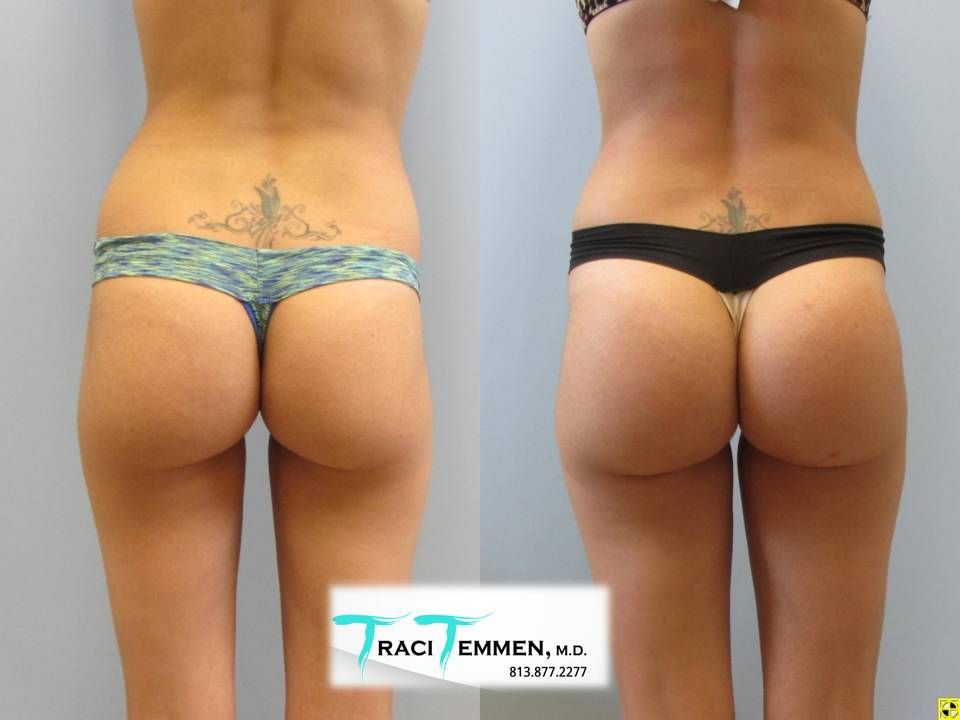
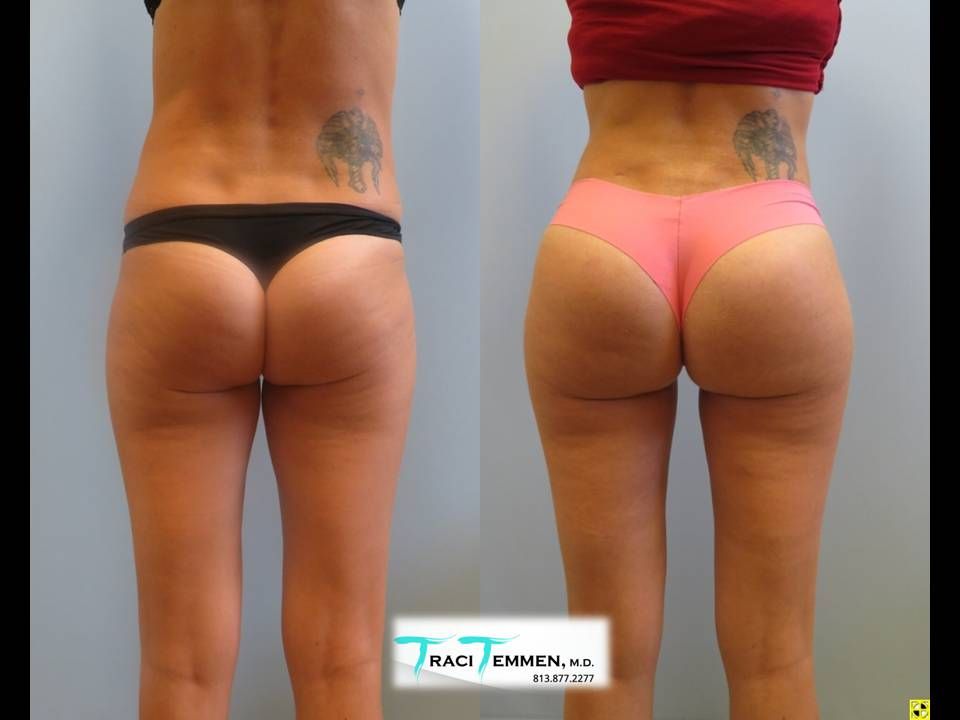
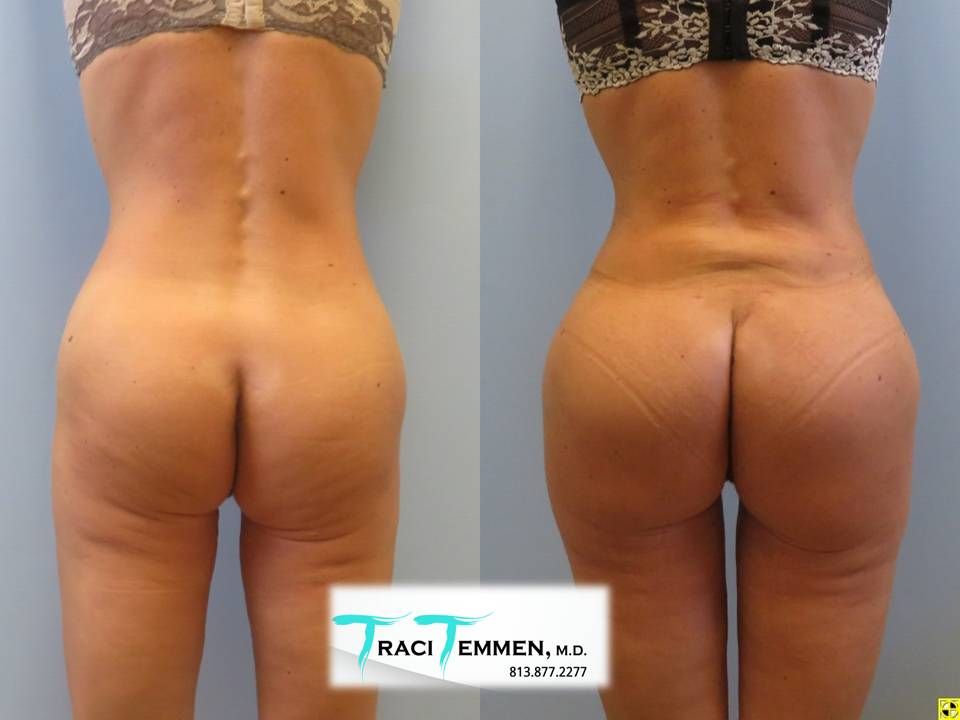
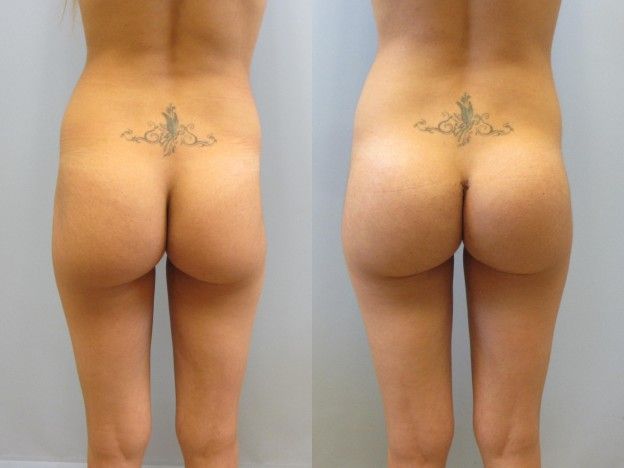
If a picture is worth a thousand words, then a gluteal augmentation with a butt implant before and after photo is priceless! Dr. Traci Temmen and her many satisfied gluteal augmentation patients are proud to showcase her before and after butt implant pictures in the Gallery section of this website. Feel free to look through the website and print off your favorite before and after gluteal augmentation or Brazilian butt lift photographs to discuss with Dr. Temmen at your consultation. In addition to those on the website, Dr. Temmen has many more before and after photos available for viewing during your gluteal augmentation with implants or Brazilian butt lift consultation.
For more information on Dr. Traci Temmen, gluteal augmentation with implants, and all other cosmetic surgery procedures offered by her, please contact us at (813) 771-6393 to schedule an appointment.